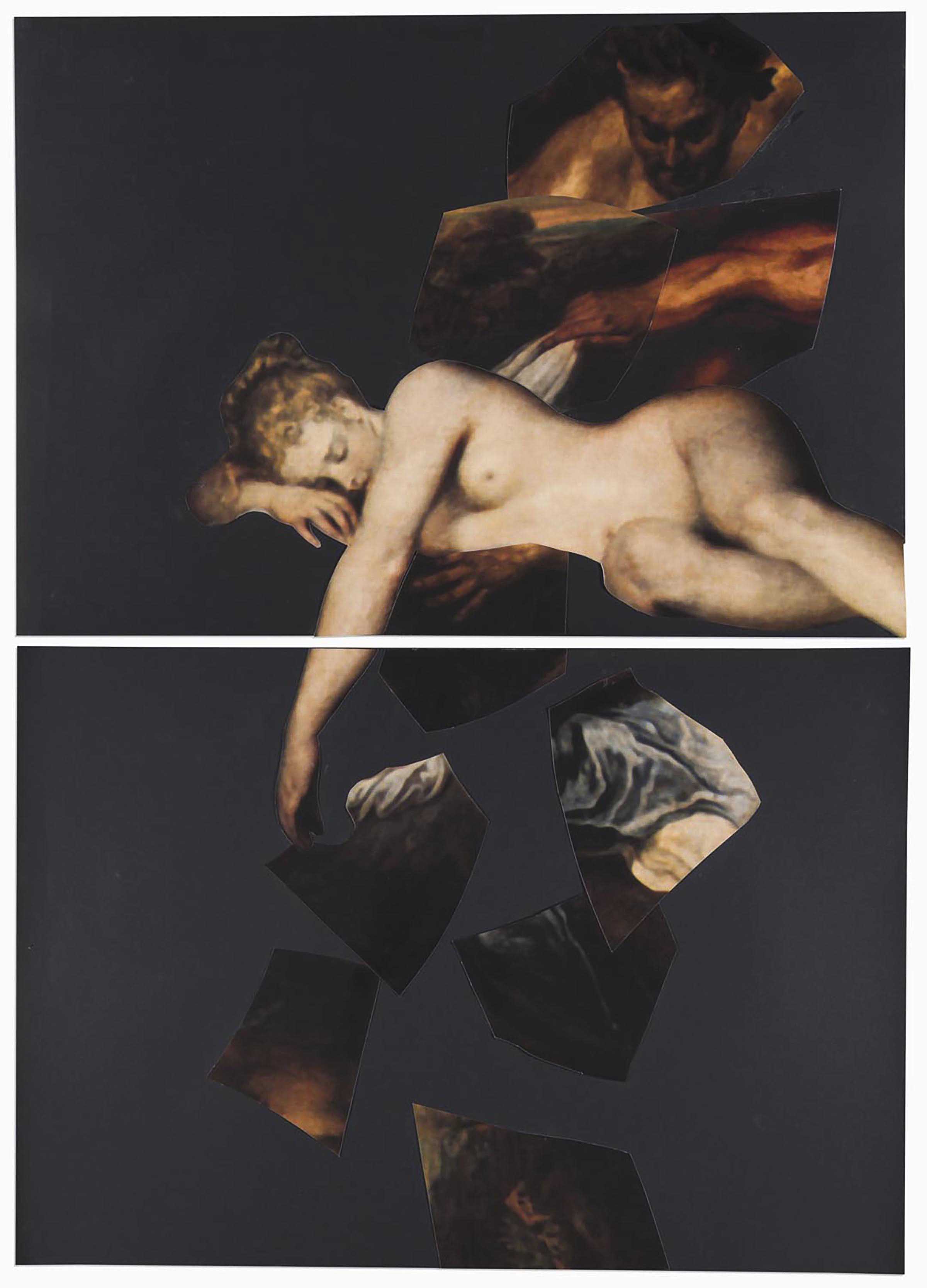
Giove e Antiope, 2021
GPO-1058
Jupiter and Antiope
Collage on black paper
Two framed parts 70 x 100 cm each, overall dimensions 146 x 102 cm
Titled, signed, and dated on the verso of the second element, centre: “ “Giove e Antiope” / Giulio Paolini / 2021”
Private collection
Two elements arranged so that they are close together, suggesting the illusion of a support surface, present the image of a satyr turned towards a reclining female nude that is precariously balanced along the edge of the upper sheet. The figure’s left arm is outstretched towards the lower sheet, on which other fragments from the same iconographic source are scattered freely.
The work refers to the protagonists of the painting, Nymphe et Satire (1715-16, also known as Jupiter et Antiope) by Jean-Antoine Watteau, in which, as Paolini declares, “Jupiter in the shade and in the middle ground discovered Antiope without touching her… It seems there will be no contact in a scene where the light is all that offers the absolute beauty of a body”.1
In a metaphorical key, the mythological figure of Jupiter who, disguised as a satyr, desires and seduces Antiope, recalls the artist who attempts to fix Beauty within the limits of a painting. The ideal dimension escapes every attempt at definition, however, as suggested by the fragmented image.
1 G. Paolini in conversation with B. Della Casa, 7 February 2021.
Jean-Antoine Watteau, Nymphe et Satyre, dit parfois Jupiter et Antiope, 1715-16, oil on canvas, 73.5 x 107.5 cm, Musée du Louvre, Paris.

