Sale di lettura, 2004
GPO-0892
Reading Rooms
Dismantled work
Invited by MART Museo d’Arte Moderna e Contemporanea di Trento e Rovereto to converse with the museum collection, Paolini chose six works for the same number of interventions in the rooms where they were on display. Arranged in the same order, the “six reading rooms”, as the artist called them, feature the following interventions.
De Chirico Room
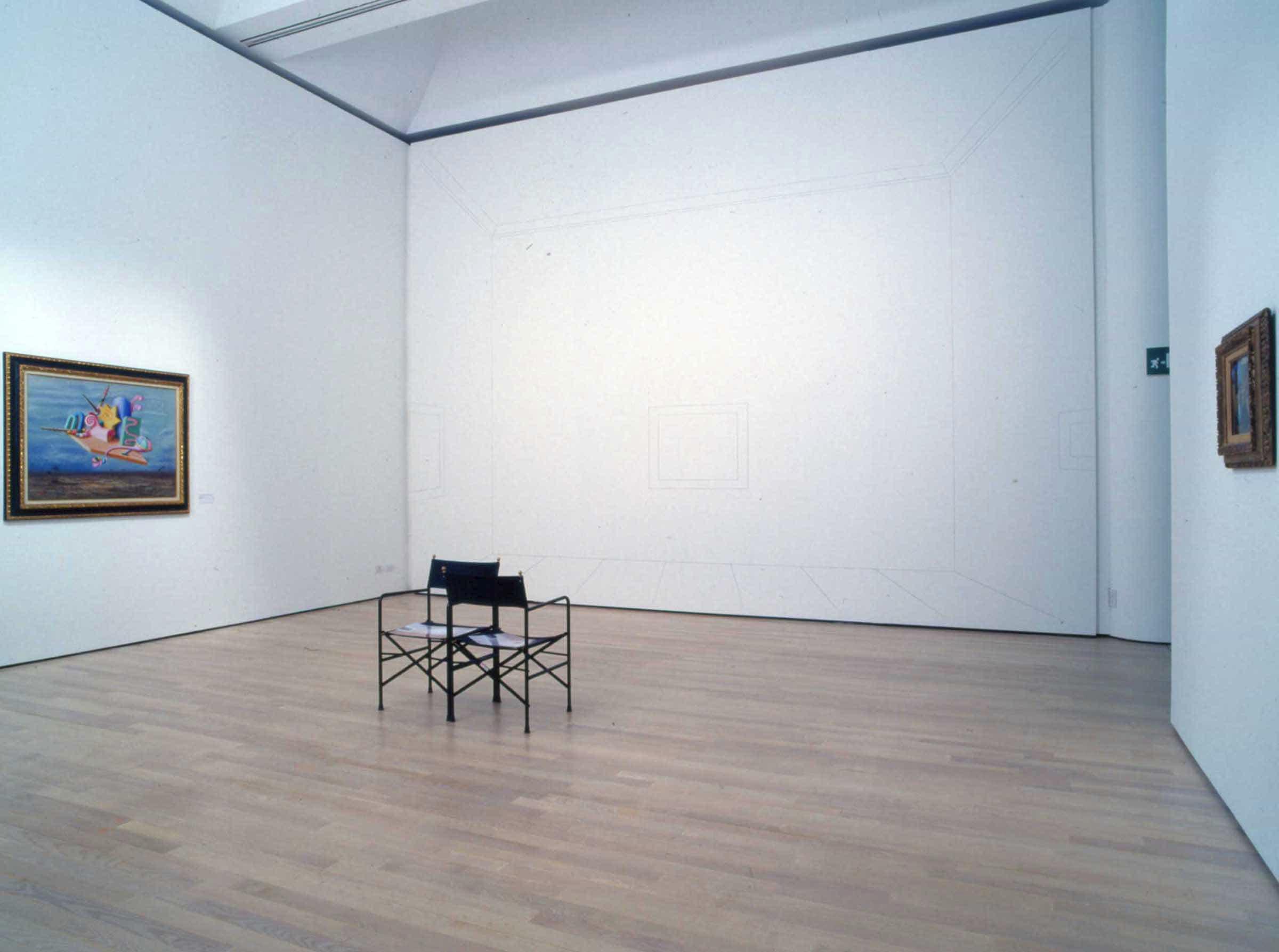
On the wall opposite Thèbes (1928) by Giorgio de Chirico a drawing represents in full scale the spatial layout of the room depicted in the painting, while the three frames outlined on the wall recall the paintings actually present in the exhibition room (Thèbes at the centre and two paintings on the side walls). Two photographs laid down on two chairs, turned to face the opposite directions, enhance the double vision of the original painting and its transcription on the wall. The image placed on the chair turned towards the de Chirico painting reproduces a view of the wall with the drawn intervention and the two side paintings. The other photograph, placed on the chair turned towards the wall of the intervention, instead illustrates a view of the wall with the painting by de Chirico.
Morandi Room
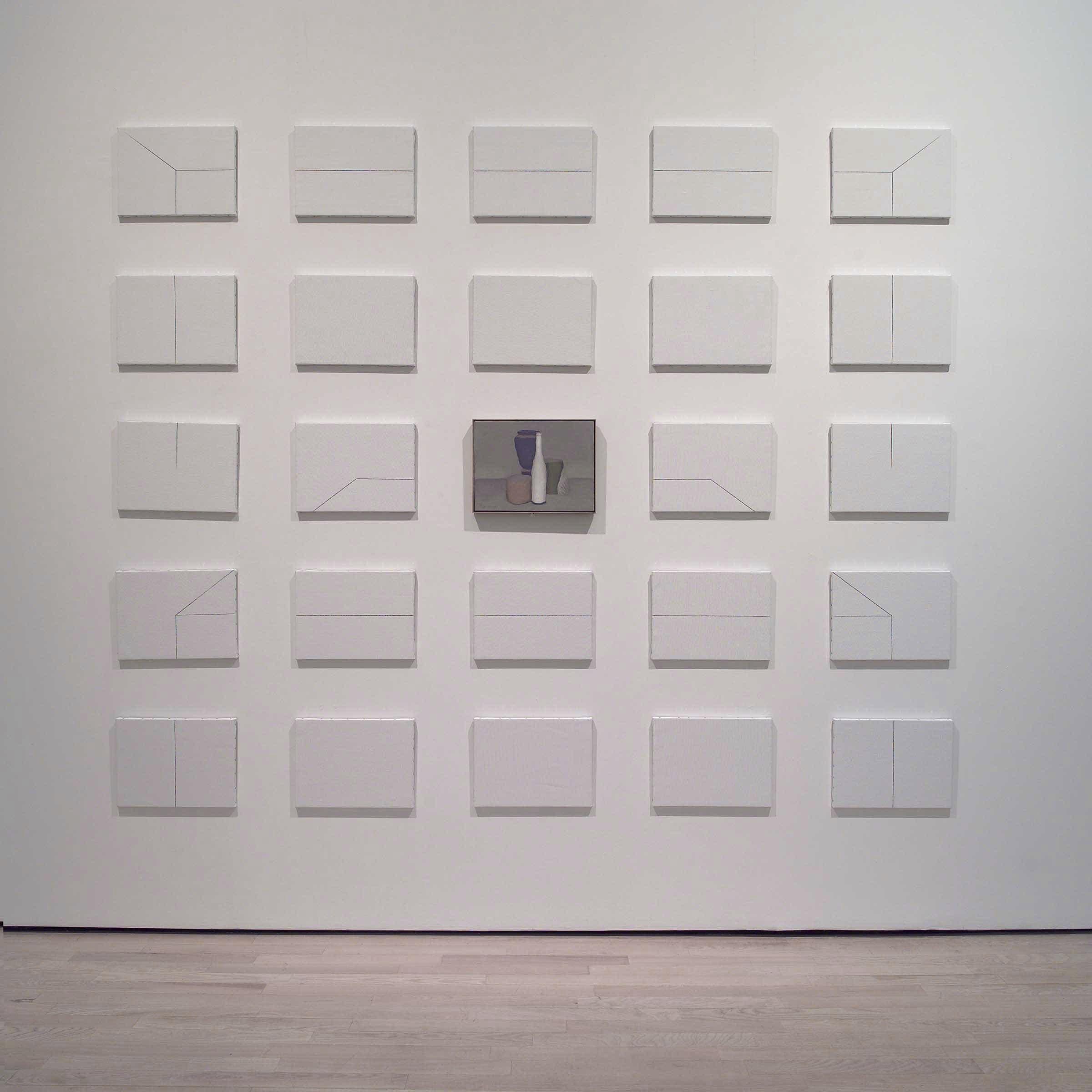
Giorgio Morandi’s Natura morta (1960) is included at the centre of a pattern of primed canvases that repeat its format. On the group of canvases a line continues the profile of the painted table and evokes the spatial layout of a room. The painting is thus arranged in the same exhibition room where it is displayed, like a “real-life” transcription.
Licini Room
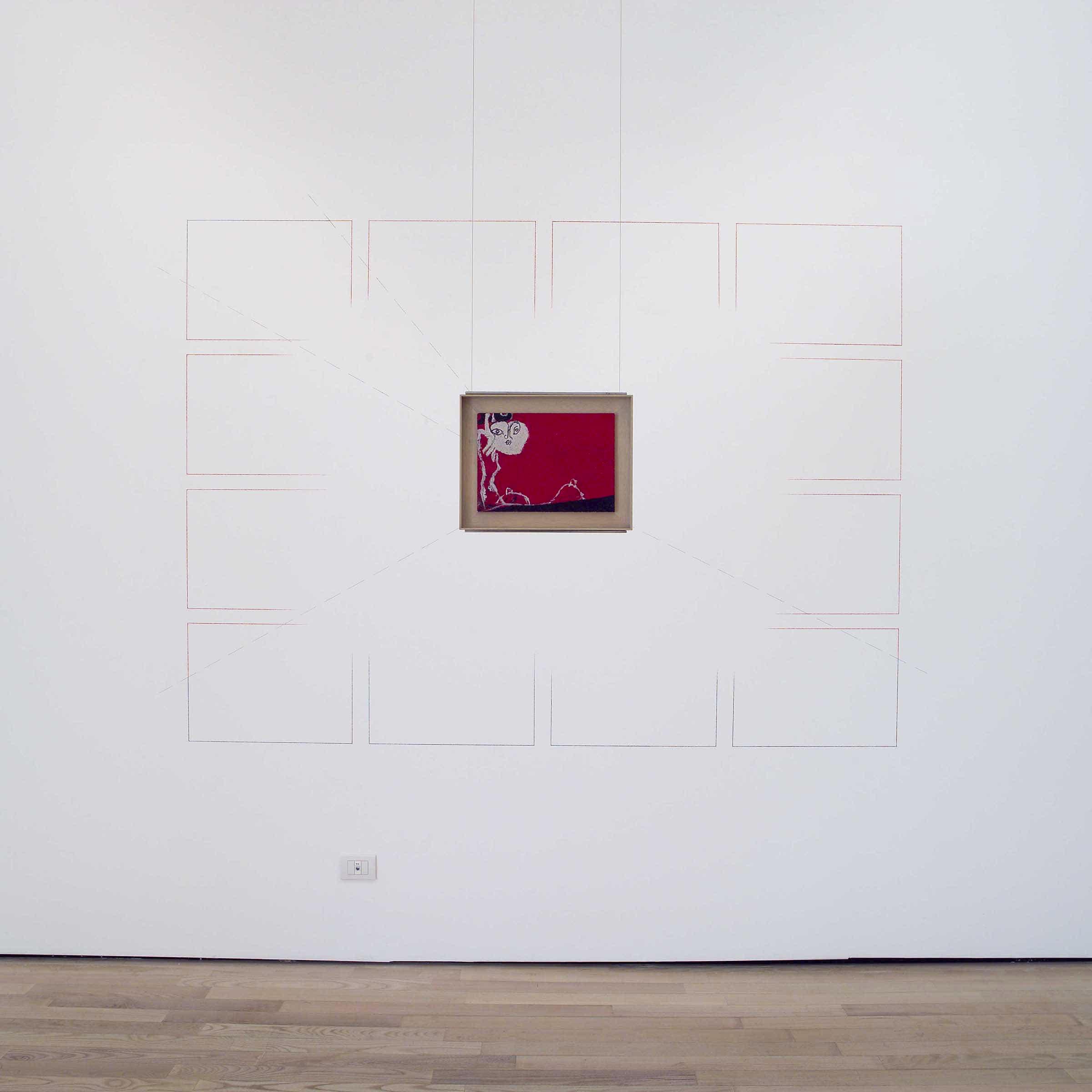
Amalassunta su fondo cinabro (1947) by Osvaldo Licini hangs before the wall, on which a drawing offers the echo of its image. The ensemble of rectangles outlined in red and black pencil (depending on the varying of the colours in the painting) is interrupted in the middle, which corresponds to the enlarged projection of the painting. The empty area is crossed by red-black lines, which reiterate the lines of force of the subject depicted, and trace the chromatic transitions from red to black in the background of the painting.
Melotti Room
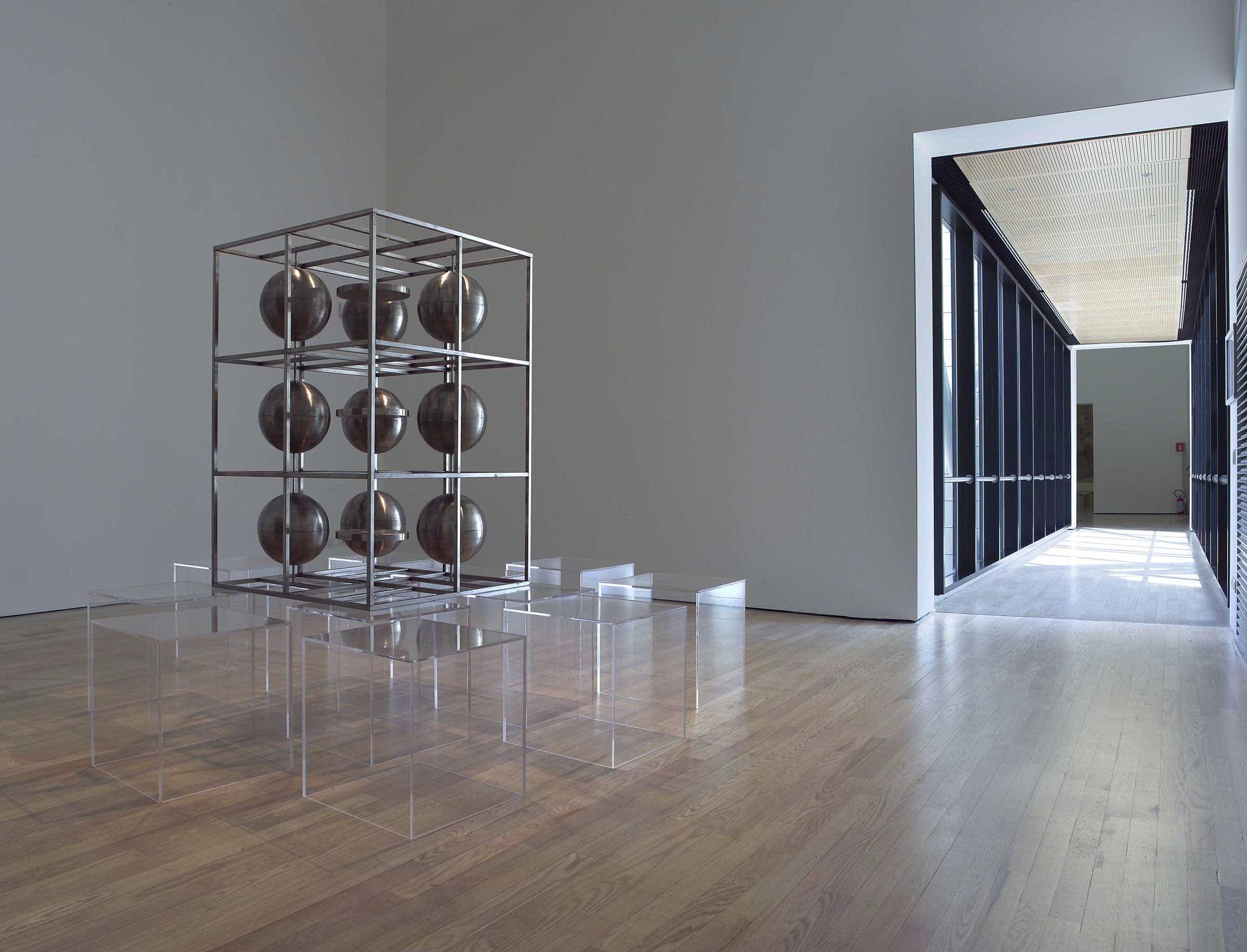
The empty modules that make up the body of Fausto Melotti’s Scultura n. 21 (1935/83) are duplicated through twelve plexiglas cubes, arranged on the ground as a support for the sculpture.
Fontana Room
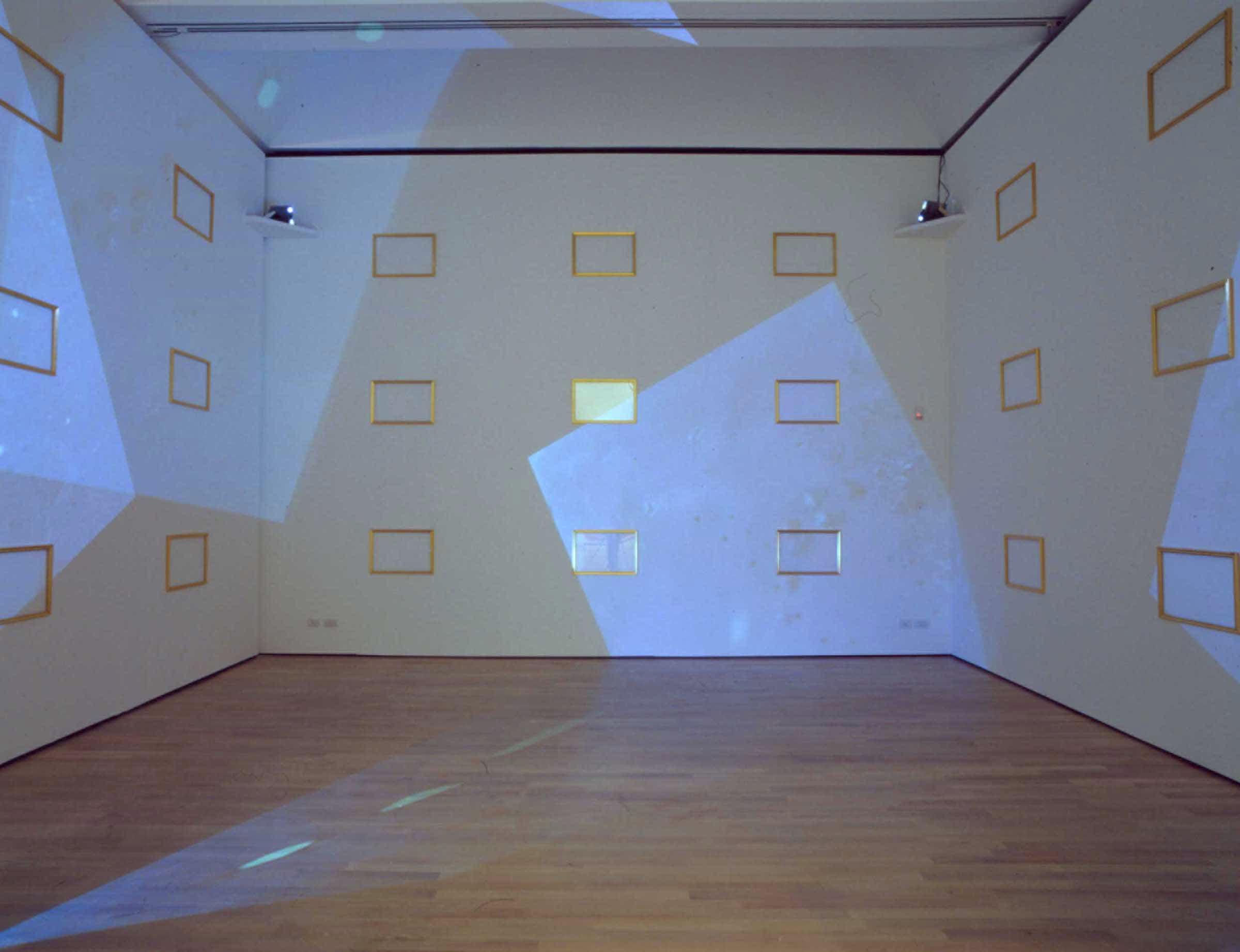
With respect to the other rooms, the intervention does not directly converse with the original work – Concetto spaziale (1955) by Lucio Fontana – but limits itself to evoking it through the luminous projection of enlarged details, which recall the cosmic spatiality of the painting. The images shaped in irregular formats interfere with an orderly pattern of gilded frames arranged on the walls, suggesting that from one painting countless other paintings can be spawned.
Boetti Room
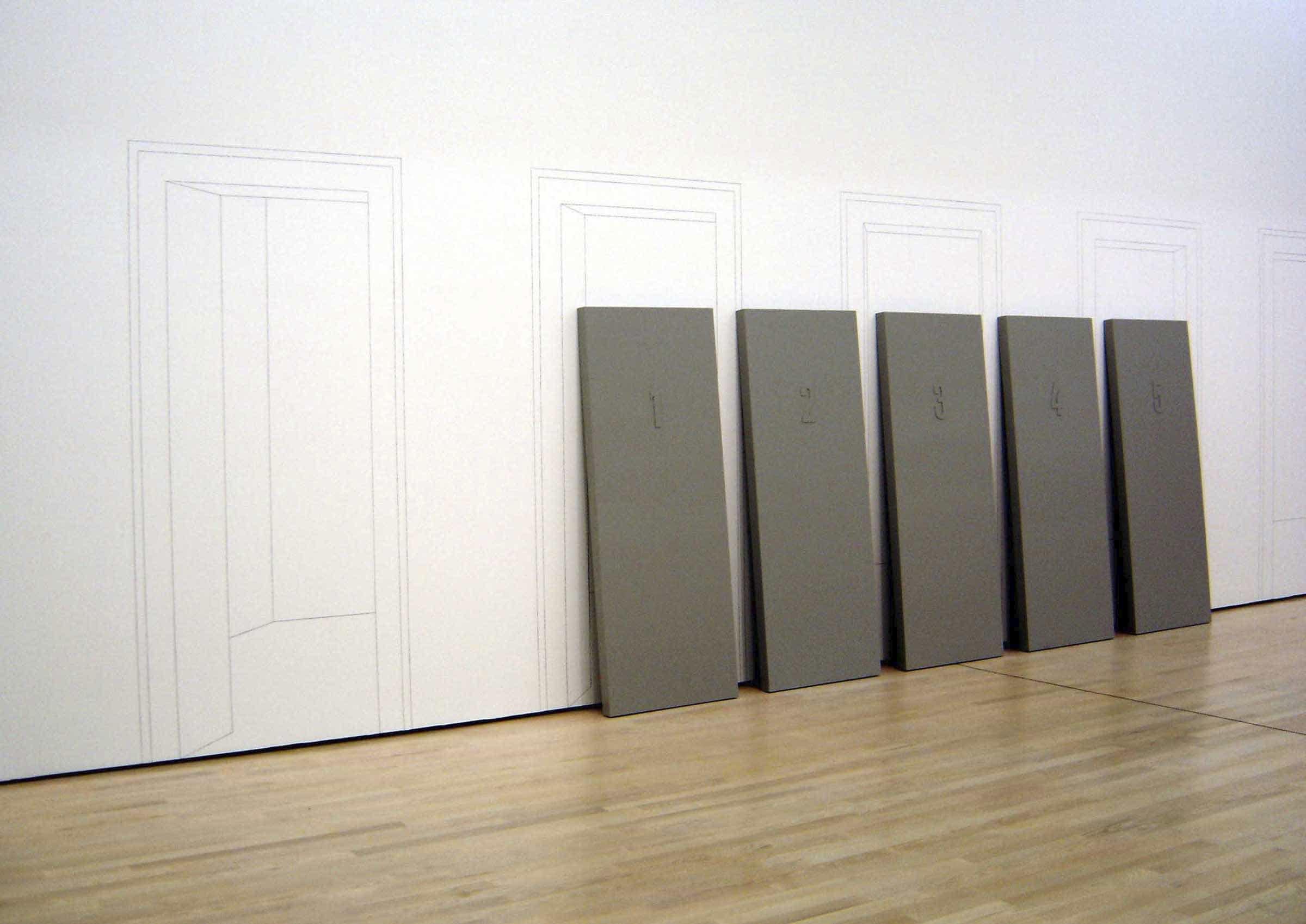
The 5 porte numerate (1966-67) by Alighiero Boetti are propped up against the life-size drawing of the five doors that distribute the entrance area to Paolini’s home. The conversation between the doors is a nod to the “felicitous coincidences” between the two Turin-born artists, bound by a long friendship.
Works from the collection of the MART Museo d’Arte Moderna e Contemporanea di Trento e Rovereto, Rovereto:
• Alighiero Boetti, Senza titolo (porte), 1966, glazed wood and cork, five parts 200 x 90 cm each.
• Giorgio de Chirico, Thèbes, 1928, oil on canvas, 90 x 117 cm.
• Lucio Fontana, Concetto spaziale, 1955.
• Osvaldo Licini, Amalassunta su fondo cinabro, 1947.
• Giorgio Morandi, Natura morta, 1960.
• Fausto Melotti, Scultura n. 21, 1935, steel, 55 x 35 x 35 cm.
| 2004 | Rovereto, MART Museo d’arte moderna e contemporanea di Trento e Rovereto, Sale di lettura. Giulio Paolini dialoga con la collezione permanente, 28 May - 22 August, col. repr. n. pag., references in the text by G. Verzotti n. pag. |
| • | G. Paolini, “Visita privata”, in Sale di lettura. Giulio Paolini dialoga con la collezione permanente, exhibition catalogue, Rovereto, MART Museo di Arte Moderna e Contemporanea di Trento e Rovereto (Rovereto: Nicolodi editore, 2004), n. pag. |
| • | R. Ferrario, Giulio Paolini. Un viaggio a distanza (Busto Arsizio: Nomos Edizioni, 2009), pp. 125, 128, not repr. |

